Budget and prices
What a camping kit really costs you per trip
Spread the kit over the trips you really take and add the gas. The number of trips a year decides the cost far more than the price on the tent does.
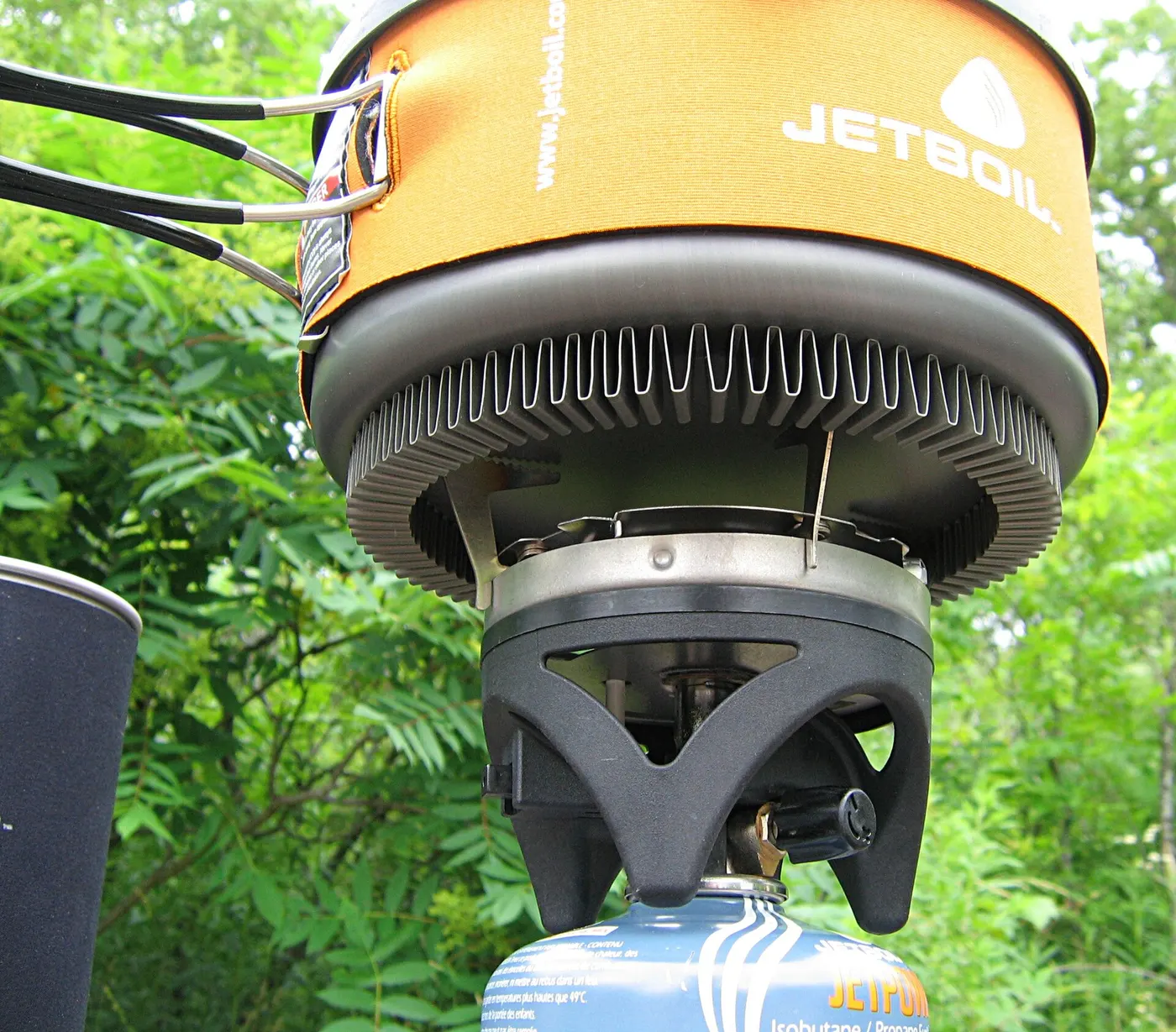
The price on a tent answers the wrong question. What camping costs you is the kit divided by the trips you take with it, plus the gas, the fees and the replacements along the way. Two households with identical gear can be $47 a trip apart purely because one of them goes out more often.
This guide works the arithmetic through in order so you can substitute your own figures. Every price is an example checked on 2026-11-03, not a quoted price, and nothing here is for sale. The ABS put annual CPI inflation at 4.3% for the 12 months to September 2026, so a figure written down today moves.
Divide by trips, not by years
A reasonable two-person starter kit at the example prices used throughout this guide comes to $1,350: a tent at $450, a sleeping bag at $280, an insulated mat at $180, a canister stove at $120 and a pack at $320. That is the number people compare against each other, and it is almost useless on its own.
Spread over 6 years at 8 trips a year, those 48 trips carry about $28.13 of kit each. Spread over 6 years at 3 trips a year, 18 trips carry $75.00 each. Same gear, same money, and a difference of $46.87 a trip created entirely by how often the car leaves the driveway.
That is why the honest question before buying is not whether a $450 tent is better than a $250 one, but how many weekends a year you will really use it. The cost-per-use calculator on this site takes your own kit total and trip count so you can see the figure rather than guess it.
| Kit total | 3 trips a year | 8 trips a year | 15 trips a year |
|---|---|---|---|
| $700 | $38.89 | $14.58 | $7.78 |
| $1,350 | $75.00 | $28.13 | $15.00 |
| $2,400 | $133.33 | $50.00 | $26.67 |
Each cell is the kit total divided by (trips per year x 6), with nothing subtracted for resale. A kit sold on at the end of 6 years reduces every cell in its row proportionally.
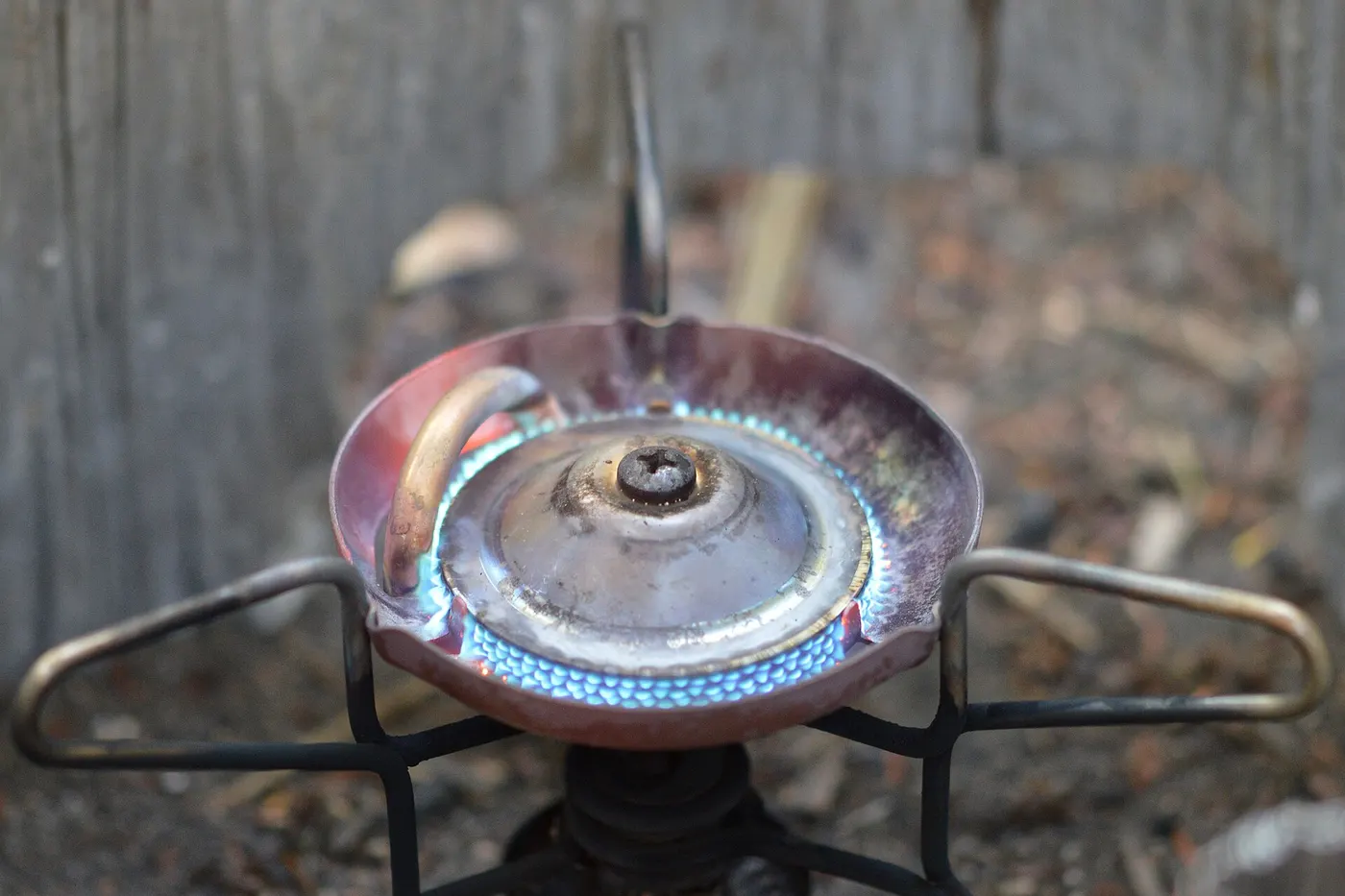
The consumables are small, predictable and easy to forget
A 230 gram isobutane canister at about $9 covers roughly 4 weekend trips of boiling water for two people, which is $2.25 a trip. Over 48 trips that is $108 of gas across the 6 years, or 8% of the $1,350 kit total.
Replacement pegs, a repair patch, a spare mat valve and seam sealer come to perhaps $60 across the same 6 years. Add the gas and the recurring spend is about $168, which raises the 48-trip figure from $28.13 to $31.63 a trip. That is the real all-in number for the middle column.
Park entry and camping fees sit outside this arithmetic because they are set per park and per night rather than per item, and they are the one line that genuinely differs between a national park booking and a free bush camp. Put the fee you actually pay into the calculator alongside the kit rather than assuming an average.
- Gas: about $9 per 230 gram canister, roughly 4 trips per canister, about $2.25 a trip
- Spares and repairs: roughly $60 across 6 years, about $1.25 a trip at 48 trips
- Total recurring spend at 8 trips a year: about $168 over 6 years
- All-in figure for the $1,350 kit at 8 trips a year: about $31.63 a trip
How long the kit actually lasts decides everything above
The 6-year assumption in the table is doing most of the work, and it is the assumption most buyers get wrong in the optimistic direction. A tent packed away damp loses its fly coating in 3 seasons; the same tent dried before storage commonly reaches 8 to 10 years. A down bag left compressed in its stuff sack loses loft in 3 or 4 years, while the same bag stored loose in a large cotton sack can pass 10.
Insulation outlasts hardware in general. Zips, buckles, pole shock cord and mat valves are the parts that fail, and they are also the parts that can be replaced for $20 to $60 if the manufacturer sells them. Before buying, look for a spare parts page rather than a warranty page: a repairable tent is the difference between the 3-year and the 10-year column.
Australian consumer guarantees apply automatically to products bought from a business trading in Australia, and Consumer Affairs Victoria states the consumer threshold as products or services costing up to $100,000, with $40,000 applying to purchases made before 1 July 2021. Acceptable quality is one of those automatic guarantees, which is why a tent that fails in its second season is a guarantee question rather than a goodwill question.
| Item | Fails first at | Typical repair | Example part cost |
|---|---|---|---|
| Tent fly | 3 seasons if stored damp | Re-coat or replace fly | $90 to $160 |
| Tent poles | Shock cord, not the sections | Re-cord the pole set | $20 to $35 |
| Inflatable mat | Valve and seam | Valve kit and patches | $25 to $40 |
| Down bag | Loft, if stored compressed | Wash and re-loft | $35 to $60 |
| Pack | Buckles and hip belt stitching | Replacement buckles | $15 to $30 |
Example figures with a check date of 2026-11-03. They are illustrations of the order of magnitude, not quotes, and parts availability differs by manufacturer.
Buying from overseas: what lands on the price
Consumer prices in Australia are advertised GST inclusive, so a $450 tent on an Australian shelf already contains about $40.91 of GST. That is the figure you are comparing against when an overseas listing looks cheaper.
For goods imported by consumers, business.gov.au states that GST applies to most retail sales of low value physical goods and that this affects goods valued at A$1,000 or less, with the A$1,000 threshold based on the customs value so that transport and insurance costs are excluded. In practice that means an overseas seller registered for Australian GST collects the 10% at checkout on a low value consignment.
Above that threshold the charge moves to the border. A kit with a customs value of $1,200 attracts $120 of GST plus any duty and clearance charges at import, and those clearance charges are what turn an apparent saving into a loss. The landed-cost calculator on this site adds freight, GST and a clearance allowance so the two prices can be compared on the same basis.
- Write down the overseas price converted to Australian dollars
- Add freight and insurance, which sit outside the A$1,000 customs value test
- Add 10% GST, collected at checkout at or under A$1,000 of customs value
- Above A$1,000 of customs value, add GST, any duty and a clearance charge at the border
- Compare that total against the GST-inclusive Australian shelf price, not against the ex-tax one
Putting the whole number together
On the example figures used throughout: a $1,350 kit, 8 trips a year, 6 years, $168 of gas and spares. That is about $31.63 a trip of equipment and consumables before fees, fuel or food.
Change one input at a time and the ranking holds in almost every household. Trips per year is the largest lever by a wide margin, longevity is second, and the difference between two tents at the same retailer level is third. A cheaper kit rarely rescues a household that camps twice a year, and an expensive kit rarely punishes one that camps fifteen times.
The one number worth being honest about before you spend anything is the trip count. Count last year's nights out rather than next year's intentions, and put that figure into the calculator.
Before you buy
- Count the nights you camped last year, not the nights you intend to camp
- Divide your kit total by trips per year times the years you expect to keep it
- Add about $2.25 a trip for gas and about $1.25 a trip for spares
- Check whether the manufacturer sells poles, valves and buckles separately
- Dry the tent fully before storage and store the bag uncompressed
- Add 10% GST and freight to any overseas price before comparing it
- Subtract a realistic resale figure before judging an expensive item
Questions readers ask
- Should I hire gear instead of buying for the first few trips?
- At 3 trips a year the $1,350 kit costs $75.00 a trip over 6 years, so hire at under that figure is cheaper until the trip count rises. The crossover is arithmetic rather than opinion: divide the kit total by the trips you expect over the life of the gear and compare it against the hire rate for the same nights.
- Does buying second-hand change the per-trip figure much?
- It changes the numerator, not the divisor. A $700 second-hand kit at 8 trips a year over 6 years is $14.58 a trip against $28.13 for the $1,350 new kit. The risk is life: if the used tent reaches only 3 years, the same $700 lands at $29.17 a trip and the saving disappears.
- How much does selling the kit on afterwards help?
- Subtract the resale figure from the kit total before dividing. Selling the $1,350 kit for $400 after 6 years leaves $950 to spread over 48 trips, which is $19.79 a trip instead of $28.13. Items with a strong used market, chiefly packs and tents, carry most of that recovery.
- Is the gas figure realistic for cold weather?
- It is an example for boiling water for 2 people on weekend trips. Cold canisters lose pressure and burn less efficiently, so a winter trip can halve the number of trips a 230 gram canister covers, taking the gas cost from about $2.25 to about $4.50 a trip. Weigh a part-used canister before you leave rather than guessing.
Sources
- business.gov.au — International tax: GST on low value imported goods and the A$1,000 customs value threshold — checked 2026-11-03
- Australian Bureau of Statistics — Consumer Price Index, Australia, September 2026 (annual CPI 4.3%) — checked 2026-11-03
- Consumer Affairs Victoria — consumer guarantees that apply automatically, including the $100,000 threshold and the $40,000 figure before 1 July 2021 — checked 2026-11-03
Some links on this site can earn us a commission. That does not change which product a guide recommends, and it adds nothing to your price. Advertising is not enabled on this site yet. When it is, ads will be labelled and kept visually separate from the guides.